

The Bayonne City Council approved two non-binding resolutions opposing data centers at a chaotic meeting last week after outraged residents packed the chambers to voice their concerns.
By Dan Israel/Hudson County View
The council voted unanimously (5-0) to approve both resolutions at its April 15th meeting, amid a heated back-and-forth with the audience.
The first resolution states the council will “not allow a data center in the entirety of Bayonne.”
The second authorizes a study of the council’s ability to rescind data centers as a previously approved permitted use, and researches drafting first resolution into a binding ordinance.
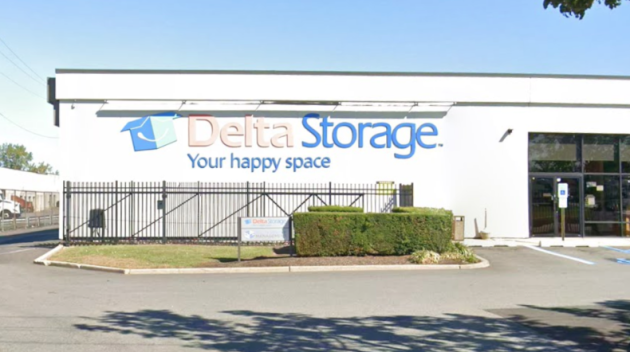
The measures occurred after over 19 members of the public passionately speaking out against the data center potentially located at the Delta Self-Storage Facility at 71 New Hook Road.
Data centers were permitted at that site last December following separate votes by the planning board and council, after the related redevelopment plan was amended to include the facilities as permitted uses.
Sparks flew as residents relayed urgent concerns over utility bill increases, citing Synapse Energy Economics report findings that a 20 percent energy bill increase across the state in June 2025 was primarily due to existing data centers.
“When data centers are built, they raise utility rates for nearby communities. That’s us,” said lifelong resident Crystal Aponte.
“As demand surges, utility companies pass the cost of infrastructure upgrades and increased energy procurement onto residents and small businesses through higher rates. Bayonne residents have already seen an immense increase in their electricity bills, and this would only make it higher.”
Speakers highlighted the 2024 United States Data Center Energy Usage Report to Congress that showed data centers consumed 4.4 percent of total U.S. electricity in 2023, expected to climb to anywhere from 6 to 12 percent by 2028.
Additionally, they generate a total indirect water footprint of nearly 800 billion liters and create 61 billion kilograms of carbon dioxide.
“Additionally, the presence of data centers would decrease the surrounding property value, which contradicts the economic goals of Bayonne,” said Camyron Chauffe, who identified as a newer Bayonne resident.
“The sheer amount of noise produced by these data centers poses a great threat to the general public health of residents.”
Bayonne, advocates argued, lacks the infrastructure for a data center, already surrounded by factories, power plants, the airport, and the cruise terminal and port.
Many speakers felt the redevelopment plan shouldn’t have ever been amended to include them, also questioning whether a redeveloper was already working on the property.
“Why else would the current owner of the property ask for this amendment to the redevelopment [plan]?,” said resident and civil engineer Adam Brulinski.
“What you voted on on December 3rd was specifically to add a data center to that amendment. So you could have voted against that.”
Further, some in attendance felt that many data centers will close after the artificial intelligence market bubble pops, noting that related local construction jobs are temporary while these facilities have minimal employees and could increase costs for substantial job providers like 1888 Studios.
“Please provide transparency to the community,” said Patricia Hilliard, a Bayonne resident and the chairperson of Hudson County Group of the New Jersey Sierra Chapter of the Sierra Club.
“Let us have a voice … because we will be considering this when we vote, and help us build a happy, healthy community.”
Aponte noted that the council had no questions regarding data center impacts when the redevelopment plan was approved in December of last year, asking for an explanation.
After no answer, Council President Gary La Pelusa stated he would speak after public comment concluded, adding that “This is a statement period, not a question and answer, back and forth,” prompting shouts of “How much money did you get?” and “Who got paid?”
2nd Ward Councilwoman Jacqueline Weimmer responded anyway, stating that the ordinance in question was approved “to expand available uses and the definition of what could potentially go there,” not for an actual site plan.
She asked about impact on residents regarding utilities in December – before public outcry – and was told there would be “no significant impact.”
La Pelusa stated that proposal indicated the utilization of external water and energy companies, thus the council approval at the time, but they have since learned of the environmental impacts.
Weimmer told the public their comments were “best served” when there is actually an item related to a proposed data center on the agenda, drawing roars from the crowd that “no one knew,” and “you kept it quiet.”
Additionally, Councilman at-Large Loyad Booker, a mayoral candidate, was heckled for approving an amendment to the redevelopment plan to allow the possibility of a data center while voting as the council designee to the planning board.
He said it was one of multiple potential uses approved for the property, but the angry crowd barked back: “You should have never agreed,” and “you belittle people.”
“I’m not belittling anyone, sir,” Booker retorted. He said his previous “yes” vote was out of “naivety” on the subject, and that nothing other than zoning uses were approved.
Amid the public speakers, Weimmer took to the podium for five minutes of public comment stating that, with “no dog in the race” in the upcoming May municipal election, everyone involved was “making a mockery of the very thing you’re fighting for” by politicizing this topic and “would not take part in it.”
“You are here only at this point in time,” Weimmer said.
“You were not here when that came up to vote in December. You were not here all throughout the last four years … You care now because somebody has asked you to.”
After her fiery speech, Weimmer later questioned Director of Planning and Zoning Joseph Skillender about the December vote that prompted this debacle.
Weimmer insisted the council was led to believe impact on residents would be minimal, noting that residents’ concerns were absent at the time.
Responding to an array of questions by Weimmer line by line, Skillender confirmed there was no redeveloper for the site and that any developer would need site plan approval, a redevelopment agreement, and a financial agreement.
He said the redevelopment plan was initially adopted because several self-storage facilities in the area were struggling with unsustainable low-occupancy, with two of three likely to close without redevelopment.
The crowd shouted inaudibly at Weimmer seemingly blaming her in part for the ordeal, and she snapped back: “No it was you, because you weren’t here at the time.”
After another outburst, La Pelusa and Weimmer repeated that this was not an open forum before she slighted the heckler: “Let’s maintain our composure as a lady. I understand it might be difficult for some, but let’s try.”
Skillender continued that this proposal was advanced under then-Mayor Jimmy Davis because the property owner and Bayonne Energy Center made an agreement to provide power directly to any data center at the site without impacting residents’ energy bills.
“So there would be no negative effect with regards to utility costs to the local residents?” Weimmer asked. Skillender replied: “I would like to believe yes.”
On health and environmental impacts, Skillender noted every building must comply with state regulations, that the council can require further studies.
He said that the closest resident is over 1,000 feet from the industrial area, and any data center developer would have been required to clean up contaminated roads in Constable Hook as a community benefit.
Following that, La Pelusa motion to add a resolution to the agenda stating the council won’t approve data centers if there are negative environmental impacts.
1st Ward Councilman Neil Carroll suggested prohibiting the approval of any data centers in Bayonne, and Skillender confirmed they “can do this resolution.”
Weimmer also included that the city will study if the council can rescind the data center zoning.
The motion including both topics was unanimously added, and later in the meeting the council split the resolution before approving both.
According to La Pelusa, this showed the council listens to constituents when they raise concerns but the public remained relentless, shouting “You still do what you want,” to which Carroll responded: “We just did what you wanted, so I don’t know where you’re coming from.”