

In an editorial, Hudson County Improvement Authority (HCIA) Director of Sustainability Amanda Nesheiwat goes over the finer points of recycling and why they’re important.
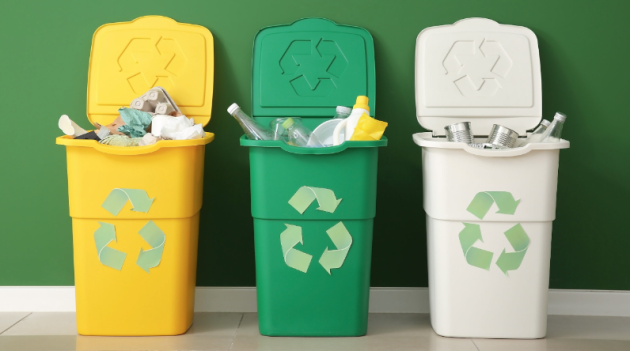
Should you throw pizza boxes and bottle caps in the recycling bin? We are asked these questions frequently by residents in Hudson County. In fact, it’s a question that all 21 counties receive in New Jersey.
There are so many rules and exceptions to recycling, but the point of this article is to get you to understand why these rules exist and what happens to your recyclables when you put them on your sidewalk each week for collection.
I also want to equip you with the information you need to dispel the myths that have caused both the recycling industry and municipal recycling programs to suffer.
For some context, I’m the director of sustainability for the Hudson County Improvement Authority (HCIA) and have been working in government for the last 15 years.
One of our major goals at the HCIA is to help you understand recycling and offer services to municipalities to improve their programs.
Beyond recycling, our county executive, Craig Guy, is working with us to ensure that municipalities get the resources and assistance they need when it comes to all sorts of sustainability initiatives.
There are two kinds of curbside recycling programs in NJ. Dual Stream Recycling and Single Stream Recycling.
Dual Stream Recycling means that you have two recycling bins. One is for paper and cardboard. The other is for plastics, cans, and glass, also known as your “comingled” recycling.
Single Stream Recycling means that you can put all your paper, cardboard, and your co-mingled (bottles and cans), in the same bin.
Most residents have dual stream recycling for their curbside program in Hudson County. Every municipality manages their own contracts for both trash and recycling collection.
The commercial sectors have their contract and sometimes prefer single stream recycling. This means that if you are on a college campus or work in an office building, you may have a single stream recycling system, while at home you may have a dual stream system.
This might be confusing for the public, but single stream and dual stream recycling programs are often better suited to different environments because your home and office generate very different types of waste.
While single stream recycling may seem easier, it often results in higher levels of contamination than dual stream.
For example, when paper is mixed with soda cans or tomato jars, it can become wet or dirty, making it harder for recycling facilities to sell.
This is why most towns in ask residents not to place pizza boxes in the recycling bin. Most of the time, they get greasy or saucy.
So where do these recycling rules come from?
The best way I can help you visualize what should and should not go in your recyclable bin, is to explain how a recycling facility separates your material. If you’ve never seen a recycling facility, check out this video here.
Once your commingled recycling arrives at a facility, it travels along conveyor belts where magnets and optical sorters separate and group materials by type.
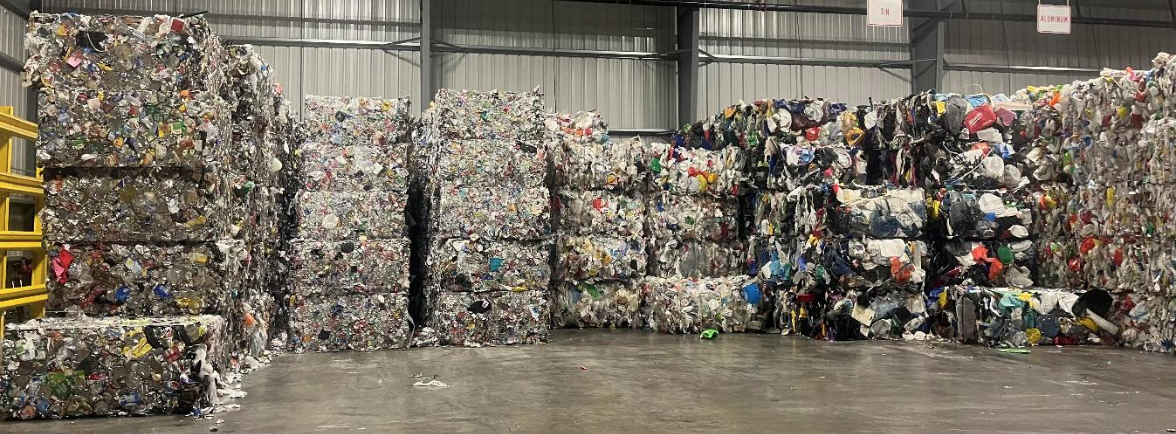
From there, the materials, except for glass, are compressed into large one-ton bales (shown below). Then, commodity traders find markets around the world, including the US, to sell these bales so companies can use them to make new products.
Here’s where it becomes challenging: markets for these materials are highly inconsistent, particularly for plastics. One year, plastic #5 (yogurt cups) is doing well, and the next, the price drops and they can’t sell it.
Plastics are derived from petroleum, yet even amid geopolitical conflict and rising oil prices, there has been little increase in demand for recycled plastics.
Government subsidies for petroleum lower the cost of virgin materials, making them more affordable than recycled plastics.
This is why some towns ask residents to recycle only #1 and #2 plastics, while others also accept #5 plastics. It often depends on the contract a municipality has with the recycling facility and what materials that facility can process and sell.
Plastics #1 and #2 have had more stable markets for years, but #5’s were a problem. Right now, residents across NJ can confidently recycle plastics #1, #2, and #5, because recycling facilities in NJ currently have stable markets for these materials.
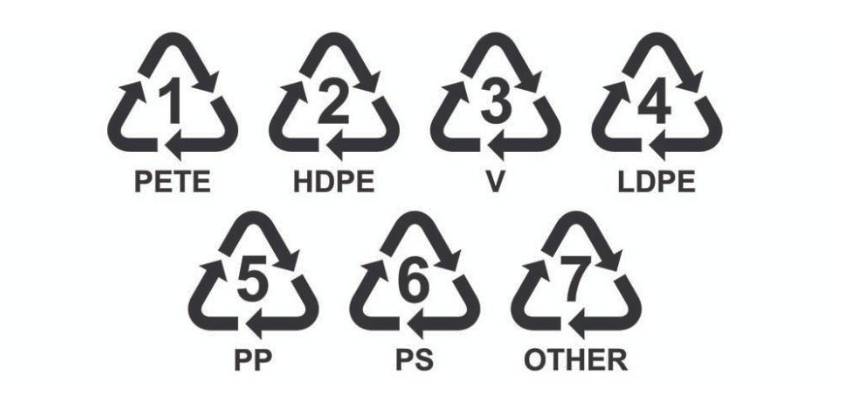
If you want to keep it simple at home, the rule for plastics should be all bottles, jars, tubs, and jugs can be recycled. All other plastics like PVC pipes, Styrofoam, toys, plastic packaging should be thrown into the trash.
Materials like wires, plastic film, and bags can wrap around equipment and jam the machinery. Smaller items, like shredded paper, fall through the sorting system. Plastic straws and plastic utensils often do the same and cannot be recycled.
This is one reason (of many) why the HCIA recommends that residents reduce their use of plastics. For plastic bottle caps, you can keep them on the bottle.
Recycling facilities are designed to process bottles with caps attached, so there’s no need to remove them. Just make sure they’re empty.
What about Enforcement?
Recycling is the law in NJ, so every municipality can enforce it. If you suspect your workplace or apartment building does not recycle, your first step is to email or call your local recycling coordinator.
Your recycling coordinator will follow up on your report of a recycling violation by sending an inspector and will reach out to the HCIA if additional assistance is needed.
Is recycling worth our time and money?
The answer is Yes! The biggest myth in recycling is that it all ends up in a landfill. Recycling businesses survive by selling their material to industries that will use it to sell more items.
Each year, your recycling coordinator reports to the State of New Jersey the weight of materials collected from your community and delivered to a recycling facility.
Look up how much our community recycles here. It’s impressive what we can keep out of a landfill. Hudson County has a residential recycling rate of about 27% (or 44% when including the commercial sector).
That translates to millions of pounds of recycling each year. In fact, the total weight of recyclables generated in our county is equivalent to the weight of approximately 1,461 Statues of Liberty!
Our recycling rate has steadily improved each year with our updated education and compliance programs.
How can you help?
Keep updated with recycling laws by visiting your town website, contact your local DPW with any questions, and visit hcia.org to download our recycling events calendar.
You can also download Recycle Coach, an app to search for recycling tips for any household item.
Reducing your use of plastics is also a big help for the environment AND your pocket!
Feel free to stop by and chat with the HCIA at your local events.
Whether it’s a health fair or National Night Out, we’re there! Our big Earth Day event is on May 2nd in Lincoln Park in Jersey City.
Visit our booths there to grab some green giveaways, and our latest environmental guide to learn more about our programs.
Amanda J. Nesheiwat
Director of Sustainability and Community Outreach
Hudson County Improvement Authority
Certified Recycling Professional (CRP)









What about e-waste like electronics, cellphones, chargers, PCs, monitors, and printers?