
In an editorial, West New York resident Michael Elling discusses the work that needs to be done to make it so that North Hudson and South Bergen counties aren’t “micro-mobility wastelands.”
My wife and I have lived in West New York at 61st Street and Boulevard East for 10 years.
We cycle and walk daily for commuting, shopping, and exercise, occasionally riding up to Fort Lee and down to Jersey City.
Over the years, we’ve observed that North Hudson and South Bergen counties are micro-mobility wastelands, leading to a heavy dependence on cars and worsening traffic congestion—a point noted by every waterfront commenter at the October 9 Hudson County Commissioners meeting.
Tens of thousands of people have moved to New Jersey’s Gold Coast over the past two decades, yet little planning has anticipated how these residents will get around—except by car or limited north-south bus service.
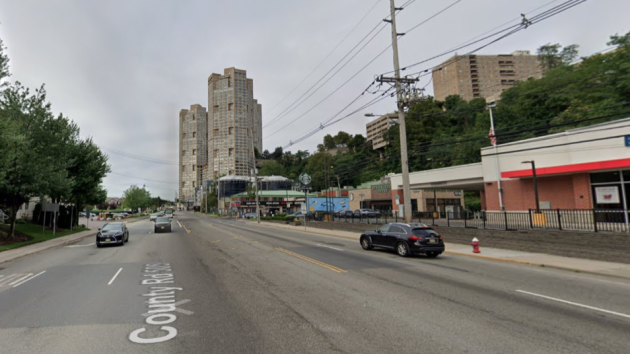
When West New York’s only east-west connector through the Palisades, Anthony M. Defino Way, was resurfaced, no bike lanes were added, forcing cyclists, e-bikers, and scooter riders onto the single sidewalk with pedestrians.
Braddock Park also lacks dedicated bicycle lanes. They should also still be considered for the federally funded Boulevard East Safety project, and finally Pershing Road in Weehawken remains unsafe for cyclists.
For those living west of the Palisades, the Hudson River may be less than 100 yards away but might as well be miles. Conversely, those living on the riverfront lack easy access to schools, recreation, restaurants, and shops in our diverse “cliff-top” communities.
They’re confined to a narrow ribbon of land and understandably frustrated by congestion. Micro-mobility solutions—both north-south and east-west—are ideal for connecting our communities across physical and cultural divides while reducing traffic and providing residents and visitors with greater mobility options.
The north Hudson mayors should support more micro-mobility and mass transportation choices for their residents, especially the new protected bike lane on River Road, which connects people to shopping, dining, and health care services, as well as commuters to ferries and light rail.
For recreational cyclists, it opens up access to the dramatic rides over the George Washington Bridge and along Henry Hudson Drive beneath the Palisades.
Additionally, the county and municipalities could consider reinstating funiculars and adding elevators to help older adults, people with disabilities, families with children, tourists, cyclists, and pedestrians move safely east-west without cars.
Imagine one of these conveyances every half mile, creating dynamic, integrated communities from JFK Boulevard to the waterfront esplanade that bridge geographic and cultural divides while reducing traffic.
While the River Road repaving could have benefited from better planning and traffic control, the outcome is undeniable: greater safety, equity, and accessibility for everyone, regardless of travel mode.
This is especially meaningful for commuters, shoppers, delivery workers, and recreational riders who travel by bike, e-bike, or scooter.
Hudson and Bergen Counties and the mayors of the Gold Coast communities should build on the River Road bike lane’s success through three key actions:
1. Develop a comprehensive micro-mobility plan to improve both north-south and east-west travel for residents, visitors, and tourists, including new solutions such as funiculars and elevators wherever geography limits mobility.
2. Build more bike lanes and safety infrastructure to create a connected network in all directions.
3. Expand the Hudson-Bergen Light Rail light rail to better link Hudson and Bergen residents to destinations north and south across both counties.
In conclusion, Hudson and Bergen counties and towns urgently need a joint micro-mobility plan to address the density and congestion created by the tremendous development of the past two to three decades.
The people who spoke against the River Road protected bike lane said there are too many cars and too much traffic. They’re saying what I’m saying—only differently.
Michael Elling
West New York, New Jersey





The fact that the Light Rail expansion to Fairview, Englewood , Tenafly and other stops has been consistently squashed by local parties doesn’t help at all. Bergenline Ave USED to be a trolley line from Ft Lee to Jersey City. Today, Bergenline Ave is a parking lot in certain areas. Imagine if that rail line was reinstated. NJ’s transit system is ok if you have a start/stop where you need to be…if you have to transfer to bus it will add too much excessive time. If you compare what we have compared to London, Paris or Tokyo, we are still in the stone age. Hudson County, and east Bergen County will continue to be dominated by cars, traffic and slow traffic.
North Hudson did have a funicular-type device to transport commuters coming from ferries a hundred or more years ago. Mr. Elling makes a compelling point. Also, where possible and practical, the Light rail should expand into more areas of Hudson County and Bergen County. Hopefully, the bike lanes constructed for each direction of travel on River Road will be able to accommodate muscle-powered and electric powered bikes.
Guttenberg, Union City, and West New York are, respectively, the most densely populated, the 2nd most densely populated, and the 3rd most densely populated municipalities in the United States, in the 6th most densely populated county in the United States. While it certainly appears that River Road has demonstrated it could be and has been reapportioned to accommodate conventional/electric bike lanes in both directions without exacerbating existing traffic flows, it does appear to be a more challenging task to produce much more north/south, or, for that matter, east/west bicycle lanes in West New York. The majority of our streets here ( on the crest of the Palisades) were opened during the first decade of the 20th Century, just as the automobile was beginning to make its its appearance in ever-increasing numbers. Thousands of West New Yorkers rely on automobiles to travel to work, to provide transportation for others, to shop, go to medical appointments, etc. Because of an acute parking problem, most pronounced in late evening and overnight hours, WNY has had to allow overnight parking at bus stops to help alleviate the shortage of adequate parking. North Hudson should indeed increase mass transit options, strongly consider returning to our funicular mode of moving folks from the Waterfront to the crest of the Palisades, and consider allowing only muscle-powered bicycles on the eastern sidewalk of Blvd.East on Sundays, with pedestrians having exclusive use of same, Mondays through Saturday.
Thank you for writing this great piece! As someone who has ridden my bike to the hospital on River Road many times, I am grateful for this start to a protected bike lane. River Road is for everyone, not just the few who can drive.