
In an editorial, Erica Walker, the chief of staff to Jersey City Ward F Councilman Frank “Educational” Gilmore, explains why the city’s proposed $200 million Jackson Square “rent-to-own” lease misses the mark.
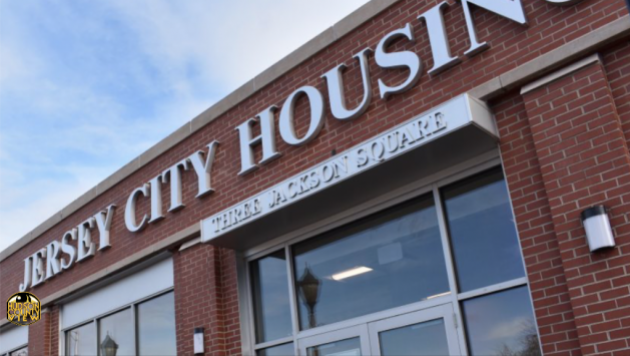
When the administration introduced Ordinance 25-110, a $200 Million Dollar, 25- to 30-year “rent-to-own” lease deal for a new municipal building in Jackson Square, (at the last minute mind you) Assistant Business Administrator, Gregory J. Corrado, CMFO said “this is about more than just the JC EDC Building.”
And it was. The deal came with lofty promises: two new parks, decorative plazas, and a statue honoring the Jackson brothers — two formerly enslaved Black men who purchased land here in the 1830s.
To some, it looked like progress. But to many in Ward F, it felt like déjà vu.
Because beneath the symbolism is a familiar story — one where the voices of the people most affected are left out of the process.
More Than Symbolism
Thomas and John Vreeland Jackson didn’t just buy land. They made history.
Their homestead in Bergen was a declaration of independence at a time when freedom was fragile for Black Americans. That land represented possibility — the power to build, to own, to belong.
The City later took that land through eminent domain. And now, nearly two centuries later, the administration is using their name to push through a $200 million financial commitment with minimal public input — just two weeks before the final vote.
$200 MILLION!
Roughly $6–8 million a year, for 25 years — money that could otherwise fund housing, youth recreation, or infrastructure.”
What’s a statue?
Even if or when a statue is truly to stand in the Jackson Brothers’ honor, it should speak the full truth — not just of their courage, but of what was taken from them.
There should be an inscription at its base acknowledging the City’s seizure of their land, so that future generations understand the cost of what they see.
At the very least, for $200 million, planned “enhancements” should stretch across the entire 26-block corridor of what was once Jackson Avenue — now Martin Luther King Drive.
But you certainly can’t honor men who fought for ownership by silencing their descendants and neighbors in the decision-making process.
You don’t celebrate self-determination with a rushed, unclear deal that commits taxpayers to three decades of payments they haven’t had a chance to review.
No public meeting was held in Ward F to map out the needs of the community, and no opportunity was given for residents to review the plan’s financial terms before introduction.
The Irony of “Progress”
This project is being billed as “the final phase” of the Jackson Square Civic Campus — a civic vision, they say, a symbol of unity and pride.
But true unity requires public interaction. Pride requires residents’ participation.
When major financial agreements are introduced without a Supplemental Debt Statement, without Local Finance Board review, and without a public meeting in the very ward where the project sits, that’s not a civic vision — that’s a civic blind spot.
This isn’t about opposition to development. Councilman Gilmore and our office have supported projects that bring resources, jobs, affordable housing, traffic safety, and beauty to Ward F.
But progress without process is just politics — and too often, politics leaves our community holding the bill.
History, Repeating Itself
The irony deepens when we remember the very street this project sits on — Martin Luther King Drive, formerly Jackson Avenue.
When cities across the country renamed their Black business corridors “MLK Drive,” the intent was to honor Dr. King’s dream. But too often, those same streets were left underfunded and over-policed — symbols of neglect instead of empowerment.
In Jersey City, we renamed Jackson Avenue to MLK Drive. We didn’t just change the name; we changed who benefited from it.
Dr. King once said, “What good is having the right to sit at a lunch counter if you can’t afford the hamburger?”
So I ask: What good is a statue if the community can’t afford to stay on the land it stands on?
A Better Way to Honor the Jacksons
If we truly want to honor the Jackson brothers, we start by honoring their values: ownership, equity, and inclusion.
That means holding a real community meeting before the final vote.
It means releasing a full cost breakdown of the $200 million project, not screenshots and soundbites. Show us all the numbers.
Show us what taxpayers will pay under this “rent-to-own” structure — year by year, line by line.
Because if this deal is truly sound, it should stand up to sunlight.
The Jackson brothers’ legacy isn’t in marble or metal. It’s in the fight for fairness.
So let’s not use Black history as a backdrop, but as a guide for justice.
And justice, in this case, looks like slowing down long enough to do things right.
The City Council must Table Ordinance 25-110 until 2026. Or better yet, vote it down and start from scratch. Put out a public RFP (Request For Proposals) by the people, for the people.
A Process that qualifies for Grant Funding. Not this behind-closed-door deal that the people didn’t ask for.
A statue may remember the past.
But transparency — and accountability — are how we honor it.






Erica Walker’s op-ed in Hudson County View yesterday paints a poignant picture of irony and exclusion in Jersey City’s proposed Jackson Square project. It invokes the heroic legacy of Thomas and John Vreeland Jackson, the two formerly enslaved brothers who, after gaining freedom in the 1820s, bought land in Greenville (then Bergen) in 1831 and turned it into a beacon of Black self-determination and an Underground Railroad safe house.
Who could argue with honoring that? But Walker’s piece, penned as chief of staff to Ward F Councilman “Educational” Gilmore, veers into distortion when it asserts that “the City later took that land through eminent domain.” This claim, central to her narrative of historical repetition, crumbles under scrutiny. It’s a rhetorical flourish designed not to illuminate the past, but to inflame the present and distract from Gilmore’s own record of inaction. Let’s be clear: Extensive dives into Jersey City, Hudson County and New Jersey state archives, property records, and historical databases turn up zero evidence of any eminent domain seizure of the Jacksons’ homestead. The Hudson County Register Office maintains digitized and paper land records dating back to the 19th century, including grants, deeds, and transfers in the Bergen/Greenville area.
Yet, searches for the Jacksons’ property in Greenville and along what became Jackson Avenue (renamed Martin Luther King Drive in 1980) yield nothing on condemnations, court filings, or municipal takings. Local histories from the Jersey City Afro-American Historical and Genealogical Society and New Jersey City University libraries detail the brothers’ purchase, their oystering success, and their Civil War-era contributions, but stop short of any dispossession by the city.
This isn’t for lack of precedent. Jersey City did wield eminent domain aggressively in the 19th century for railroads and urban expansion—the 1869 Mayor of Jersey City v. Jersey City & Bergen Railroad case alone involved heated disputes over land for tracks snaking through Bergen, including several parcels owned by freedmen.
Hudson County’s records are replete with such actions: forced sales for canals, streets, and parks, often hitting working-class and immigrant neighborhoods hard. If the Jacksons’ land had been seized, it would show up in those ledgers, just as other Black landowners’ struggles did during the era’s fragile post-emancipation land rights. But it doesn’t. Walker’s assertion appears to stem from oral tradition or unchecked assumption, not fact. In an op-ed decrying “civic blind spots,” that’s a glaring one. Why invent—or at least uncritically repeat this history now? Look no further than her boss Gilmore’s tenure. Ward F, under his watch, has seen promises pile up like uncollected trash: stalled affordable housing initiatives, crumbling youth centers, and traffic nightmares on MLK and Ocean Avenues that endanger kids daily. His predecessors, often lambasted as “do-nothing” pols, at least delivered incremental wins like the 2010s Greenville revitalization grants that actually funded rec spaces. Gilmore? He’s made them look like Barack Obama by comparison, all while racking up photo-ops and zero substantive legislation on housing equity or community grants. This op-ed feels like classic deflection: Instigate a culture-war skirmish over an unproven “seizure” to cover a dismal record of… well, doing nothing.
Don’t get me wrong—the Jackson Square Ordinance 25-110 deserves rigorous vetting. A $200 million rent-to-own lease for a new municipal building, plus parks and plazas? That’s real money, and Ward F residents should have had more than two weeks’ notice. Gilmore’s office is right to demand a full cost breakdown, year-by-year taxpayer impacts, and a dedicated community forum before the final vote. Transparency isn’t optional; it’s the bare minimum for a project billed as “unity and pride.” And yes, that promised statue of the Jacksons must tell their full story—of triumph over enslavement, not some fictional loss to the city. But tabling the ordinance until 2026, as Walker urges? Voting it down for a vague “public RFP”? That’s not accountability; that’s sabotage.
This deal could inject $6–8 million annually into local jobs, green spaces, and infrastructure, funds that would address the very housing and rec needs she laments. Delaying it risks losing grant eligibility and developer momentum, leaving Ward F in the same underfunded limbo Dr. King warned against: symbols without substance. The Jacksons didn’t build their legacy on delays or distortions; they seized opportunity amid adversity. True homage means facts over fiction, process over politics.
Maybe Ms. Walker will step up and convince her boss Councilman Gilmore to host that Ward F informational meeting and prepare for it. Make it less about attacking city staff and more about what can the Councilman can do for us, his constituents. Release the numbers proactively. But spare us the ahistorical outrage—it’s as insulting to the brothers’ memory as it is to Jersey City’s progress. Let’s honor ownership and inclusion by building together, not tearing down on shaky ground. The Jacksons would’ve demanded no less.