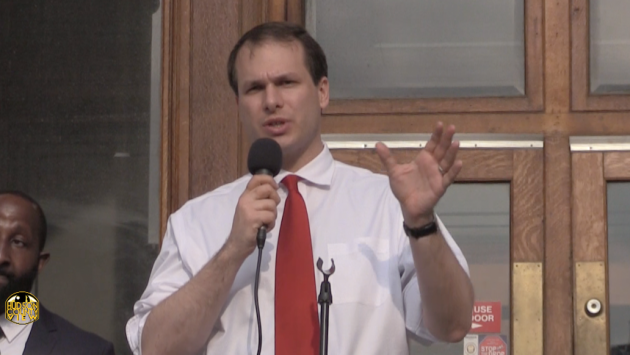
Jersey City Ward E Councilman James Solomon, a candidate for mayor, says that a crackdown on enforcing the local payroll tax delivered $103 million to the public schools, up more than 50 percent from last year.
 By John Heinis/Hudson County View
“Large corporations across the city have an obligation to pay into the city’s payroll tax, which helps fund our city’s public schools. I am thrilled that our office’s efforts to raise awareness around the tax has netted over $103 million for our public schools, and I am incredibly grateful to City Hall staff and the administration for their help,” he said in a statement.
“For too long, homeowners and tenants have been forced to shoulder the burden for the city’s budget while some corporations have simply stopped paying what they owe. Our office recognized immediately that this is unfair to Jersey City residents, and we spent the last year working to ensure businesses knew about this tax and were up to date on their payments. This is only the first step; we are also working with the Jersey City Public Schools and our state legislative delegation to give the city the tools we need to truly enforce this tax and go after any deadbeat corporations that still haven’t paid.”
Solomon had called for an audit and awareness campaign dating back to last year, which included pushing the city to do a mass mailing outreach campaign to unregistered businesses as well as directly sending letters to specific large non-registrants.
Since then, over 100 new businesses registered for the payroll tax while registered businesses who had stopped paying the tax provided back pay to the city.
The downtown councilman also stressed that no taxes were raised on any business or homeowner; instead, the money was collected by cracking down on large corporate tax evaders.
Solomon add that d Jersey City internal audit uncovered multiple large corporations that had either never registered for the payroll tax, as is required by law, or had simply stopped paying.